Cloud computing has become an essential part of many businesses, providing cost-effective and scalable solutions for various IT needs. Google Cloud Platform (GCP) is one of the leading cloud providers, offering a wide range of services and features for businesses of all sizes. However, like any other IT infrastructure, GCP needs to be monitored and optimized for performance and security. In this article, we’ll discuss the importance of GCP monitoring and how to maximize cloud performance and security using Google Cloud Platform (GCP) monitoring tools.
Why Is GCP Monitoring Important?
GCP monitoring is crucial for several reasons. First, it helps businesses detect and diagnose issues before they become critical problems. With GCP monitoring, businesses can proactively identify and resolve issues, such as performance degradation, network bottlenecks, security threats, and compliance violations, before they impact their operations and customers. GCP monitoring also helps businesses optimize their resource usage, reduce costs, and improve user experience.
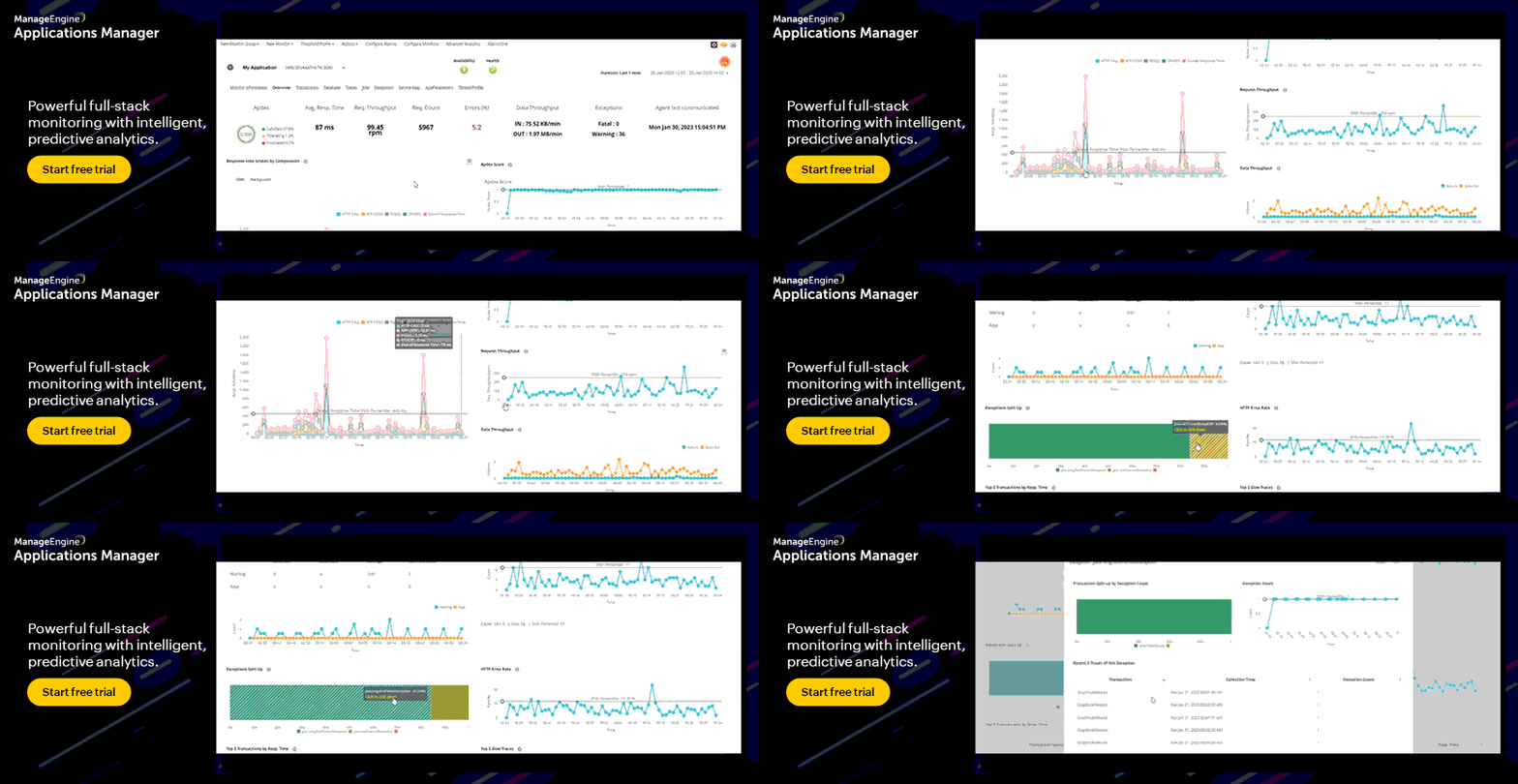
Second, GCP monitoring provides real-time visibility into the cloud environment, allowing businesses to track their service level agreements (SLAs) and ensure compliance with regulatory requirements. GCP monitoring tools can collect and analyze various metrics, logs, and events from the GCP services and infrastructure, such as compute engine, storage, networking, databases, and security, to provide insights into the system’s performance, availability, and security posture.
Third, GCP monitoring enables businesses to make data-driven decisions and improve their cloud strategy. By analyzing the monitoring data, businesses can identify trends, patterns, and anomalies, and make informed decisions on capacity planning, cost optimization, security measures, and service improvements.
GCP Monitoring Best Practices
To maximize cloud performance and security with GCP monitoring, businesses should follow some best practices.
- Define Metrics and Alerts
The first step in GCP monitoring is to define the metrics that are relevant to your business and set up alerts based on these metrics. GCP provides a wide range of pre-configured metrics and alerts for various services, but businesses should customize them based on their specific needs and objectives. For example, businesses can set up alerts for CPU usage, memory usage, network traffic, error rates, and response time.
- Monitor Logs and Events
In addition to metrics, businesses should also monitor logs and events from GCP services and infrastructure. Logs and events can provide more detailed insights into the system’s behavior, errors, and security incidents. GCP provides various logging and monitoring tools, such as Stackdriver Logging, Stackdriver Trace, and Cloud Audit Logs, that can collect and analyze logs and events from different sources.
- Use Automation and Orchestration
GCP monitoring can generate a vast amount of data, which can be overwhelming for businesses to analyze and act upon. To streamline the monitoring process, businesses should use automation and orchestration tools to automate repetitive tasks, such as provisioning resources, scaling, and incident response. GCP provides several automation and orchestration tools, such as Cloud Functions, Cloud Composer, and Cloud Deployment Manager, that can help businesses automate their monitoring workflows.

- Integrate with Third-party Tools
GCP provides a comprehensive set of monitoring tools, but businesses may also use third-party tools for specific monitoring requirements. For example, businesses can use open-source tools, such as Prometheus and Grafana, for advanced metrics visualization and alerting. GCP provides APIs and integrations with many third-party tools, enabling businesses to extend their monitoring capabilities.
- Monitor Security and Compliance
GCP monitoring should also include security and compliance monitoring. Businesses should monitor their cloud environment for security threats, such as unauthorized access, data breaches, and malware attacks, and take appropriate actions to prevent and mitigate them.